
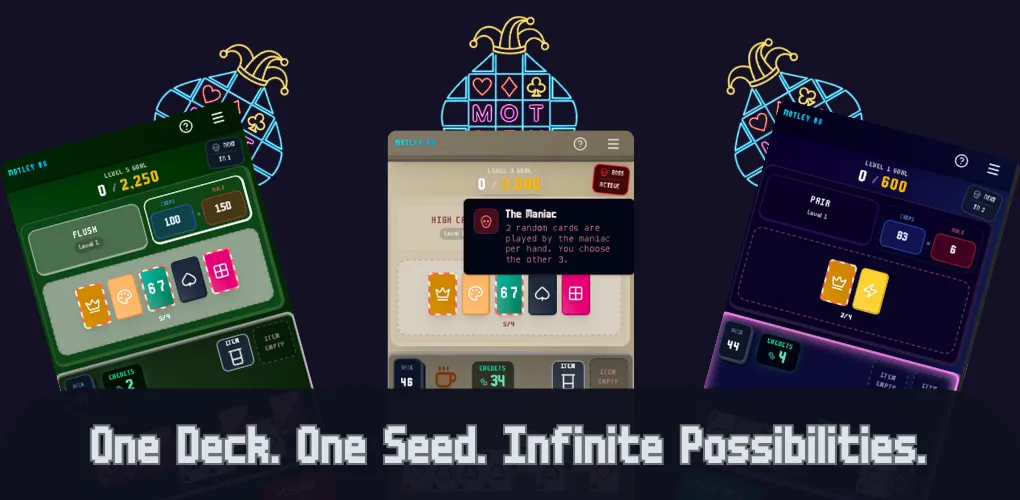
Making Motley: Designing a Balatro for Everyone
How watching friends bounce off Balatro led me to design a daily poker roguelike built around accessibility, competitive seeds, and the feeling of 'just one more run.'
The Problem Was at the Kitchen Table
I was deep into Balatro. Couldn’t put it down. So naturally I tried to get everyone around me hooked too. Friends, family, anyone who’d listen. And they’d try it. They’d play a round or two. Then they’d put it down and never pick it up again.
The feedback was always some version of the same thing: “I don’t get it.” They didn’t know poker hands. The Joker synergies felt overwhelming. The scoring math was opaque. Balatro is a masterpiece, but it’s a masterpiece that assumes you already speak its language.
That gap between how brilliant Balatro is and how many people will never experience it? That’s where Motley started.
The Core Idea: Same Seed, Every Player, Every Day
I didn’t want to make a dumbed-down Balatro. I wanted to take the part that hooked me, the optimization puzzle, the “what if I’d done that differently” feeling, and rebuild the wrapper around it so more people could get there.
The daily seed was the answer. Every 24 hours, every player in the world gets dealt the exact same run. Same deck, same shop offerings, same bosses. The only variable is you.
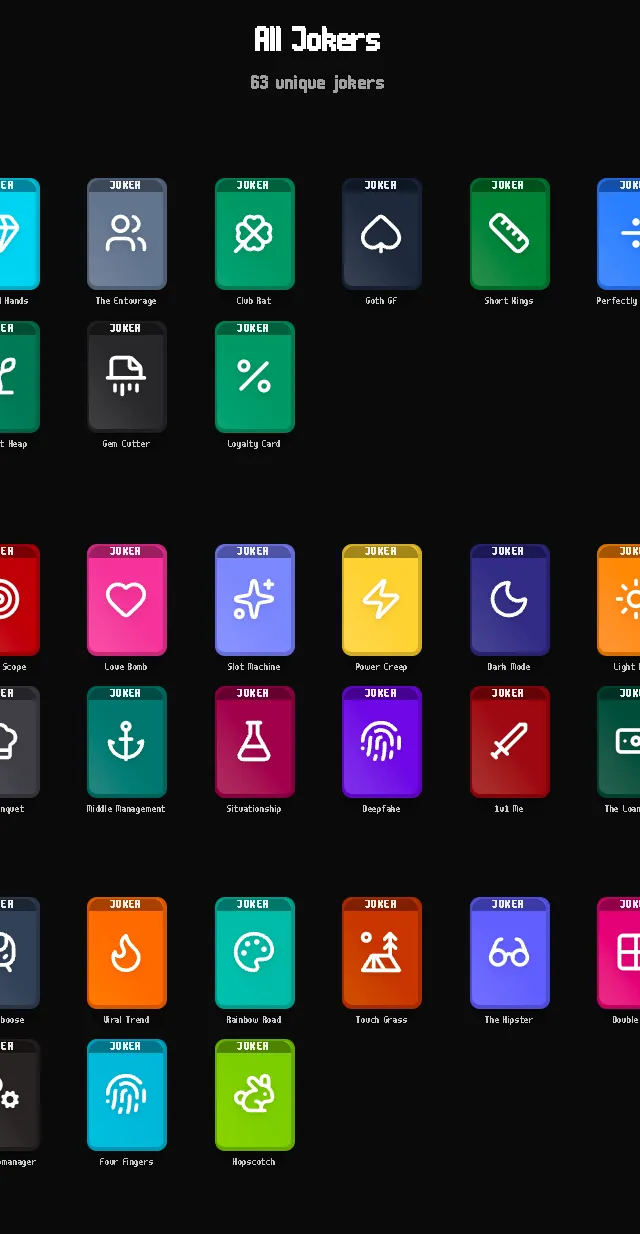
This does two things at once:
It lowers the barrier. You’re not learning a complex system in isolation. You’re competing. Competition is inherently motivating even before you understand every mechanic. You don’t need to know why a Joker combo works to see that someone scored 40,000 more points than you with the same cards. That gap is the hook. That gap makes you want to understand.
It creates the “one more run” loop. This was the design problem I cared about most. The daily seed means you can’t just grind infinite runs hoping for a lucky draw. You get one seed. But that constraint is what makes it compelling. “If I had rerolled the shop two more times, could I have beaten the top score today?” You know the answer exists because someone on the leaderboard already found it.
Balancing by Feel
I didn’t balance Motley with spreadsheets. I balanced it with feel.
The core question was always: does this feel like I could play two more times and really optimize? If a run felt solved on the first attempt, the ceiling was too low. If the top score felt unreachable, the floor was too high. The sweet spot is when you finish a run, see someone above you on the leaderboard, and genuinely believe there’s a path you missed.
That belief that there’s another way? That’s the engine of retention.
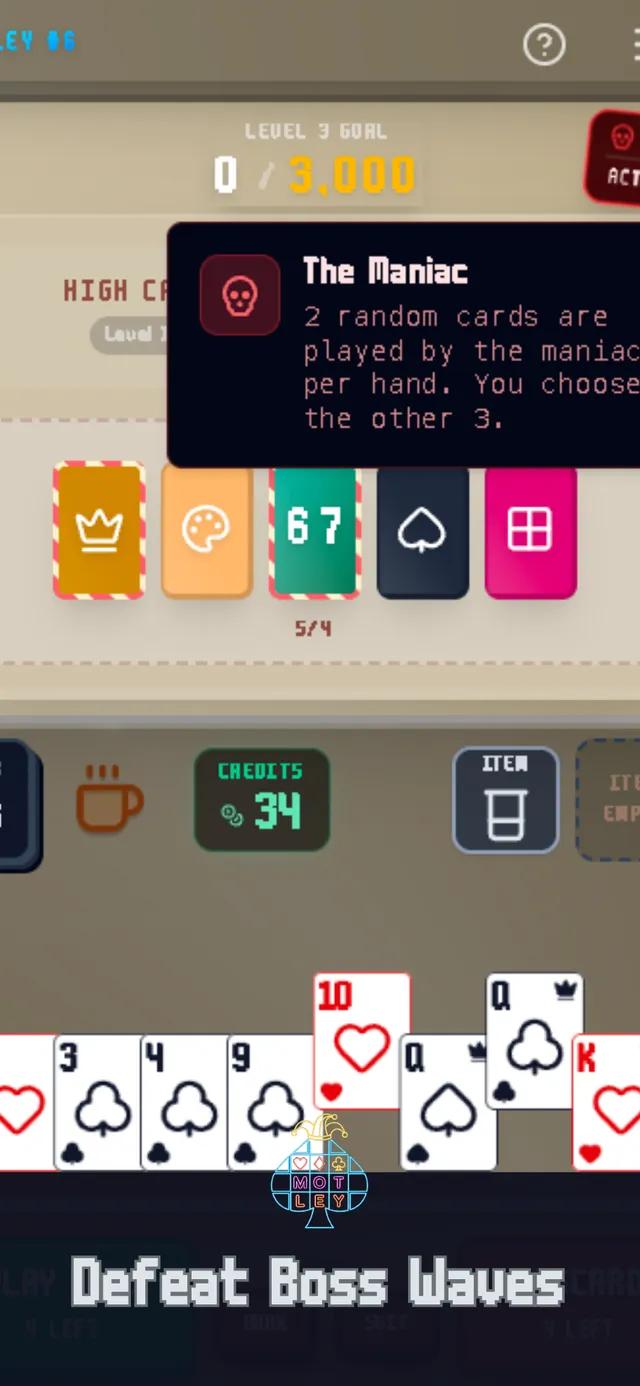
User-submitted feedback drove most of the tuning. I’d watch how people played, where they stopped, what made them come back. The Joker balance, the shop pricing, the boss restrictions, all of it was iterated based on whether players felt that pull to try again, not whether the math was theoretically optimal.
The Leaderboard as a Design Tool
Most games treat leaderboards as a feature. In Motley, the leaderboard is a design tool.
When you finish your run and see that someone scored higher with the same seed, it communicates something no tutorial could: there was a better path. You don’t need to understand the scoring system abstractly. The leaderboard proves empirically that a better strategy exists. It turns every daily seed into a puzzle with a known-solvable ceiling.
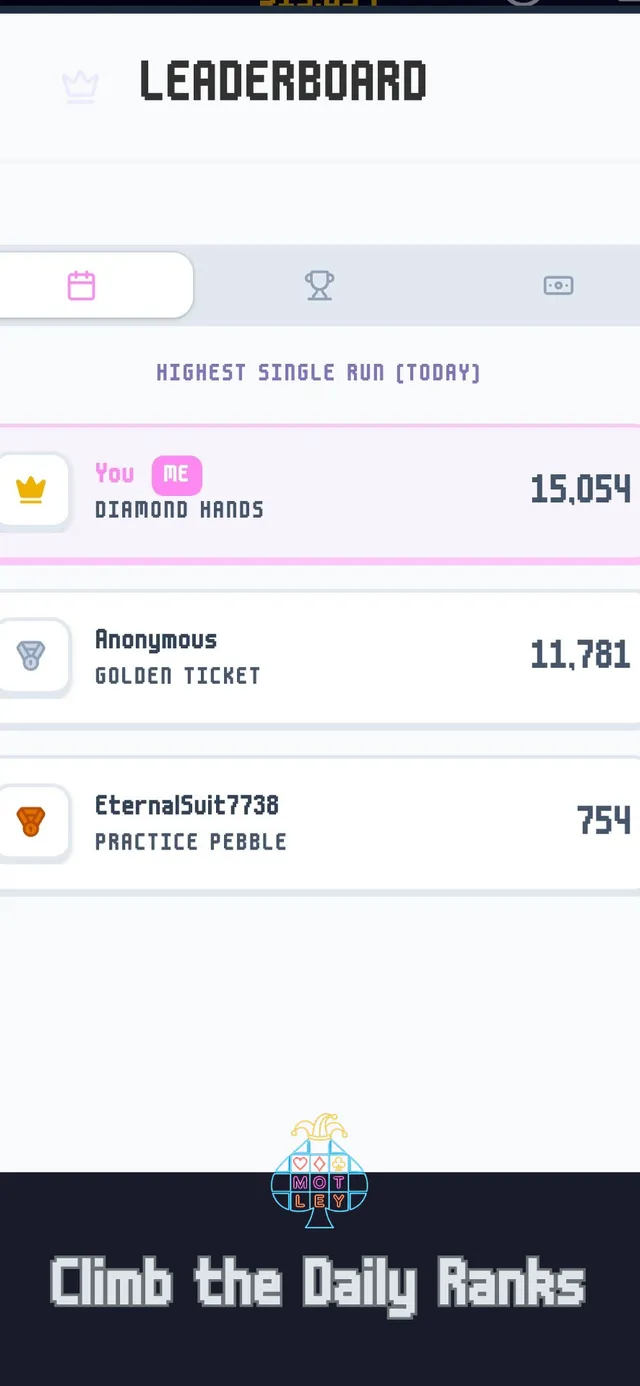
This also created organic difficulty scaling. New players compete against themselves. Experienced players compete against the board. The same seed serves both audiences without any adaptive difficulty code.
What I’d Do Differently
I underestimated how much the shop economy matters to feel. Early versions had shop pricing that was technically balanced but didn’t feel generous enough. Players need to feel like the shop is offering them opportunities, not taxing them. Making rerolls cheap enough that “just one more reroll” feels like a reasonable gamble ended up being more important than any Joker balance.
The Takeaway
Motley exists because I watched people I care about bounce off a game I love. The design isn’t about simplification. It’s about finding a different door into the same room. Daily seeds, social leaderboards, and mobile-native session lengths aren’t compromises. They’re the design.
The best compliment I’ve gotten about Motley isn’t a review or a rating. It’s my wife texting me her daily score.